A New Collection of Thoughtful Learning Apps — Now Available on iOS & Android

Image
I’m excited to share a set of mobile apps I’ve recently completed and published on both the Google Play Store and the Apple App Store. These apps are designed with a simple goal in mind: to make meaningful, structured content more accessible, whether you’re studying theology or improving your English vocabulary. 📱 Now Available on Both Platforms All apps are live and available for download: Google Play Developer Page: https://play.google.com/store/apps/dev?id=5835943159853189043 Apple App Store Developer Page: https://apps.apple.com/ca/developer/q-z-l-corp/id1888794100 📖 Theology & Confession Study Apps For those interested in Reformed theology and classical Christian teachings, I’ve developed a series of apps that present foundational texts in a clean, focused reading format: The Belgic Confession Canons of Dort Heidelberg Catechism Westminster Shorter Catechism Each app is designed to provide a distraction-free experience, making it easier to read, reflect, and revisit these im...
Swagger annotations for API that allows downloading files as zip

 I have built out an API that allows you downloading log files as zip in a sprint boot app. The app also integrated with Swagger 3, so I also want this API can be hit in the Swagger UI. In this post, I will demonstrate how to use @ApiOperation annotation to tell Swagger UI download the response as a zip file.

use @ApiOperation for your method

The key is set media type to "application/octet-stream" which can be recognized by Swagger UI. By doing so, you are set "accept":"application/octet-stream" in the request header. Put below annotation section on top of your API's controller method.

@Operation(
    		summary = "",
    		description = "",
    		method="GET",
    		responses = {
                    @ApiResponse(responseCode = "200", description = "", content = {
                            @Content(
                                    mediaType = "application/octet-stream"
                            )
                    })
            })

You also need to set 'produces = {"application/octet-stream"}' in the Mapping annotation. This is to set the response's header with "Content-Type":"application/octet-stream".

@GetMapping(value = "/yourpath", produces = {"application/octet-stream"})

set response Header, "content-disposition": "attachment; filename=xxx.zip"

In a regular HTTP response, the Content-Disposition response header is a header indicating if the content is expected to be displayed inline in the browser, that is, as a Web page or as part of a Web page, or as an attachment, that is downloaded and saved locally.

@GetMapping(value = "/yourpath", produces = {"application/octet-stream"})
public void method(HttpServletResponse response) {
            response.setHeader(HttpHeaders.CONTENT_DISPOSITION, String.format("attachment; filename=%s.zip", transactionId));
}

Try it out in Swagger UI

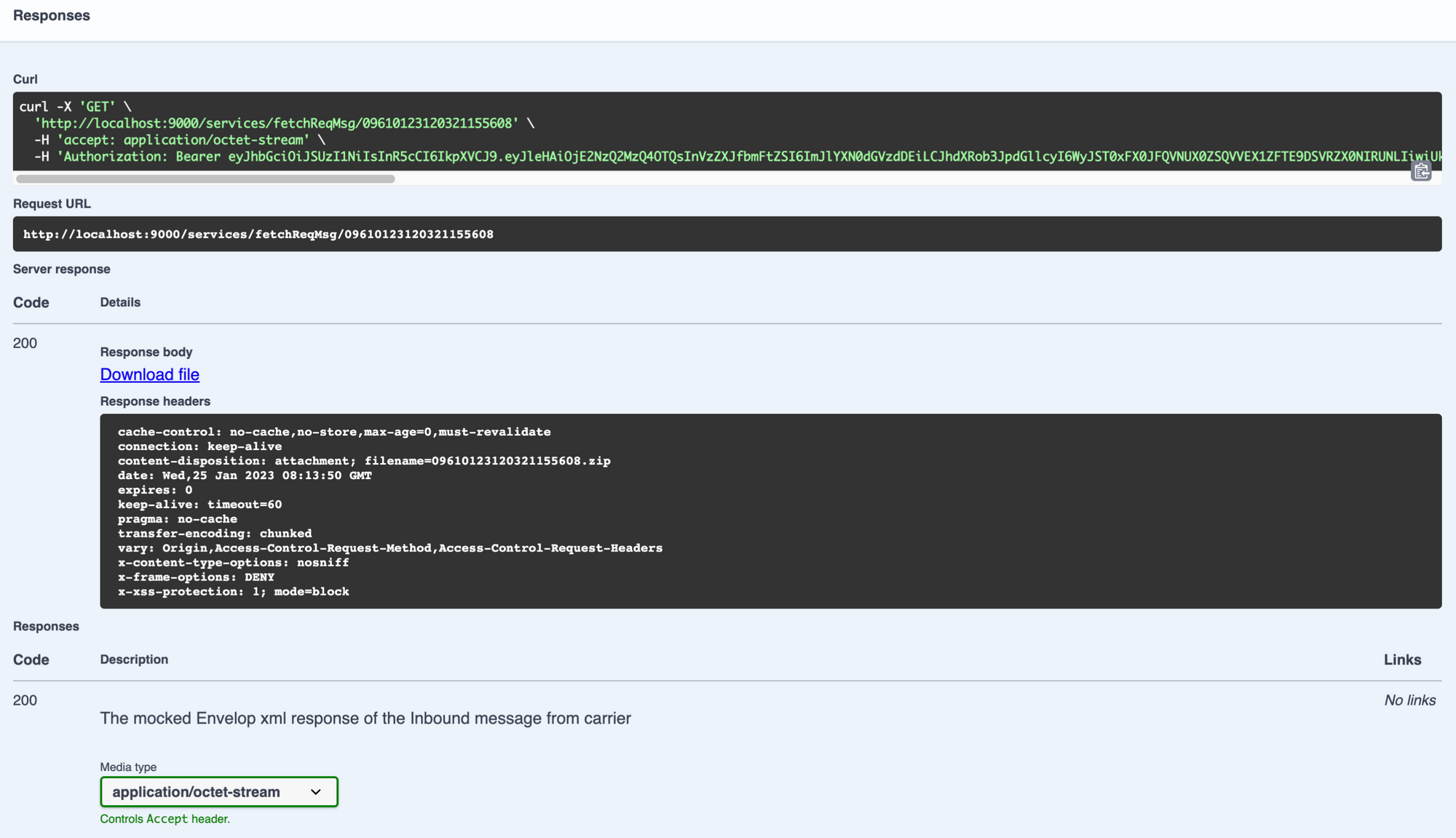
You will be able to see a 'Download file' anchor once the api successfully response you the zip file.
You also be able find in the response headers:
content-disposition: attachment; filename=xxx.zip

❤️ Support This Blog


If this post helped you, you can support my writing with a small donation. Thank you for reading.


Comments

Popular Posts

Next.js + NextAuth.js — Keycloak SSO Integration

QZL Compare:免费在线文件与文件夹对比工具,无需安装,隐私安全